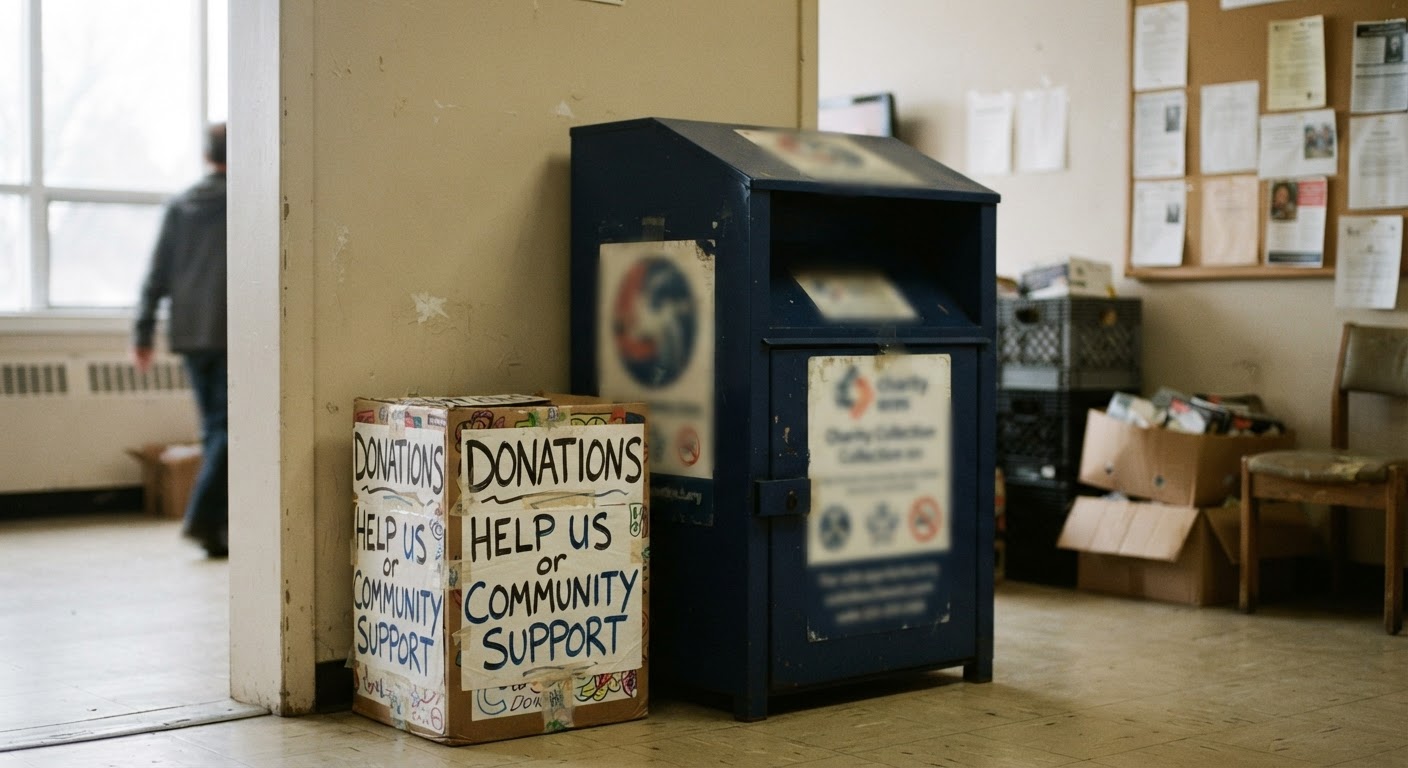
When you’re staring down a shutoff notice or trying to figure out how to fill a fridge before a paycheck lands, the instinct is to call the name you already know. That’s usually a large, national charity — the kind with a recognizable logo, a toll-free number, and decades of brand recognition. Sometimes that’s exactly the right move. Sometimes it wastes a day you didn’t have to spare. The difference comes down to what these organizations are actually built to do, and it’s worth understanding before you start dialing.
What big-name charities are structured to do well
Large national and regional charities exist at a scale that small nonprofits simply can’t match, and that scale is both their strength and the source of their limitations. They typically have standardized programs that run the same way whether you’re in one city or another. That consistency is valuable: it means there’s usually a documented process, a known set of criteria, and a system that doesn’t depend on one overworked volunteer remembering how things work.
Big organizations tend to excel at:
- Disaster response. When a hurricane, wildfire, or flood hits a wide area, the coordination, warehousing, and logistics that large charities have built over years let them mobilize shelter, supplies, and mass-casualty support faster than any local group could on its own.
- Large-scale, repeatable aid. Programs like utility assistance funds, holiday meal distributions, or medical equipment loans work well at scale because the rules are the same everywhere and the volume of donations supports predictable, ongoing programs.
- National reach for people who are new to an area. If you’ve just moved, don’t know the local landscape, or are traveling, a national charity’s local chapter or partner network can be a reliable starting point simply because it exists almost everywhere.
- Specialized, well-funded niches. Certain big charities have built deep expertise in one lane — veteran services, a specific disease community, disaster case management — and within that lane, their depth of resources can outmatch anything smaller.
The tradeoff for that consistency is bureaucracy. A national charity’s local office often has to follow rules set at headquarters, verify eligibility through a standardized process, and work within a budget allocated from a distant regional or national pool. That’s not a flaw so much as the cost of being able to help a lot of people the same way, over and over, without running out of money or playing favorites.
Where small nonprofits tend to outperform them
Small, local nonprofits — the food pantry three blocks from your house, the faith-based benevolence fund at a church you’ve never attended, the community action agency that’s been in your county since before you were born — operate on a completely different model. They usually serve a small geographic area, know the local landscape of aid intimately, and answer to a local board rather than a distant headquarters.
That local focus tends to produce a few specific advantages:
- Discretion and judgment calls. A small nonprofit’s director or intake volunteer often has real authority to make an exception, weigh a situation that doesn’t fit neatly into a form, or approve help based on a conversation rather than a checklist. National programs rarely offer that kind of flexibility because their rules are built for consistency across thousands of cases, not for the one unusual situation in front of them.
- Knowledge of what else is out there. Someone who has run a small pantry or benevolence fund for years usually knows every other local resource by name — which church has a fund for rent, which fraternal lodge helps with propane, which agency just got a new grant. That informal knowledge is often more useful than any single program, because it turns one phone call into a map of several.
- Speed of relationship-based help. When the person answering the phone can personally vouch for you, or knows the landlord, or has helped your neighbor before, decisions can happen in a single conversation instead of a multi-step verification process.
- Willingness to cover odd or overlooked needs. Small funds are often the ones that will pay for a car repair so someone can keep a job, replace a work uniform, or cover a security deposit — the kind of specific, non-standardized need that doesn’t fit into a big charity’s predefined categories.
The tradeoff here is capacity. A small nonprofit might have a modest amount of money set aside for a given month, and once it’s gone, it’s gone until the next funding cycle. They also may not be reachable 24/7, and their hours often depend on a handful of staff or volunteers rather than a call center.
How funding size affects speed and flexibility
It helps to think about money less in terms of “who has more” and more in terms of “how the money is shaped.” Large charities typically raise funds through broad public campaigns, corporate partnerships, and major grants. That money usually arrives with strings attached — restricted to a specific program, a specific region, or a specific type of need — because that’s what donors and grant funders required when they gave it. The organization then has to build internal processes to make sure the money is spent exactly as promised. Those processes are what create the forms, the verification steps, and the waiting periods.
Small nonprofits often work with unrestricted or lightly restricted funds — money from local fundraisers, congregational giving, memorial donations, or small community grants. Because there are fewer layers between the donation and the decision, there’s often less friction between “someone needs help” and “help gets approved.” A pastor with discretionary fund authority can sometimes make a same-day decision that a large charity’s regional office would need a week to process, not because the large charity doesn’t care, but because its money comes with more accountability requirements attached.
This also explains why big charities are usually better for large, predictable needs and small nonprofits are usually better for narrow, fast, or unusual needs. A big organization can promise that its utility assistance program will exist every year, in a consistent form, because it’s funded at a scale designed for that. A small nonprofit can’t promise that its car-repair fund will always have money in it, but when it does, it can move on your situation almost immediately.
Neither model is better in the abstract. They’re built for different jobs — one for scale and consistency, the other for speed and judgment. The trouble comes when someone calls the wrong one first and loses days waiting on a process that was never going to fit their situation, or when someone assumes a small nonprofit can’t help with something big and skips a phone call that would have taken five minutes.
A simple order of operations for your first calls
There’s no single right sequence for every situation, but a few general patterns tend to save time.
Start with a local referral line or community action agency
Before calling either a big charity or a small one directly, a local information-and-referral service — the kind that maintains an up-to-date list of who’s currently funded and who has money left this month — can point you straight to the right door instead of making you guess. These services exist precisely to sit above both big and small organizations and route people efficiently. If you don’t already have one bookmarked, this is worth five minutes of searching before you make any other call.
If the need is large, standardized, or disaster-related, call the big charity first
If you’re dealing with a widespread disaster, a well-established program category (like a known utility assistance fund or a national medical equipment loan closet), or a need that fits neatly into a category you’ve seen advertised, the big name is often genuinely the fastest and most reliable path. Their process exists because thousands of people before you have gone through it, and the systems are built to move volume.
If the need is specific, small, urgent, or doesn’t fit a category, call small nonprofits first
If what you need is oddly specific — a repair, a deposit, a one-time gap, a need that doesn’t have a formal program name — local and faith-based nonprofits are usually the better first call. Their flexibility is exactly what handles the situations that don’t fit anywhere else. Don’t assume you need to belong to a particular congregation or group to ask; many faith-based funds serve anyone in the community, and the worst outcome of asking is simply a “no” or a referral elsewhere.
Call more than one small nonprofit before giving up
Because small nonprofits’ funds run out and refill on their own schedules, one “no” doesn’t mean much. A pantry or fund that’s out of money this week may be flush again in ten days, and a nonprofit two towns over may have capacity when the one nearest you doesn’t. Treat a no from a small organization as information about timing, not a verdict on your situation.
Ask every organization you reach — big or small — who else they’d call
This is the single most efficient question in the whole process. Staff and volunteers at both large and small organizations usually know their local landscape better than any directory does, because they refer people out constantly. A thirty-second question at the end of any call — “if this doesn’t work out, who else would you try?” — often produces better leads than an hour of independent searching.
Keep a simple record as you go
Write down who you called, when, what they said, and any names or callback details. When you’re juggling multiple leads across big and small organizations, it’s easy to lose track of who already said no, who asked you to call back next week, and who’s still pending. A simple list — even scratched on paper — keeps you from repeating work or missing a callback window.
The goal isn’t to pick a side between big charities and small nonprofits. It’s to recognize that they’re two different tools built for two different kinds of problems, and knowing which one matches your situation is often the fastest way to actually get help instead of just making calls.